
As a child, I was drawn to horses. I spent hours sketching them, trying to capture their shape and movement, and just as many evenings reading stories like "Black Beauty".
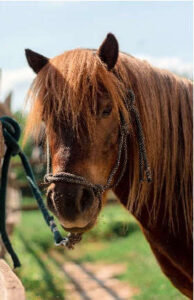 Everything changed when I was ten. Using money I’d saved from babysitting and chores, I teamed up with my dad and sisters to buy a pony named Ginger for $75. He was a retired racer from the Picton Fairgrounds, finished with the track but not short on personality. There may have been a bit of Shetland in him, but whatever his breeding, Ginger had a stubborn streak all his own..
That was the beginning of my real education with horses—and it didn’t always go as planned.
Pony on a mission
Our family home sat on a large lot on Picton’s Main Street West, with room for a barn and a good-sized corral. On the first December after we bought Ginger, as the Santa Claus parade was lining up at the LCBO just down the street, a neighbour called with an odd sighting: a pony that looked a lot like Ginger near the parade staging area.
Sure enough, Ginger had slipped out of the corral and headed straight for the action. It didn’t take long to figure it out. Before we got him, Ginger had been part of the fairgrounds scene—races, crowds, noise. The parade must have felt familiar. After that, we stopped being surprised and started joining in. Ginger had made his preference clear, and it was easier to take part in the parade than to chase down a pony who already knew where he wanted to be.
A policeman comes to call
To keep Ginger company, we sometimes boarded horses when they weren’t needed at a nearby boys’ summer camp. Looking after them fell to me and my sisters, Joan and Linda. These days, keeping a small group of horses in the middle of Picton would likely run afoul of a few bylaws—but at the time, we managed.
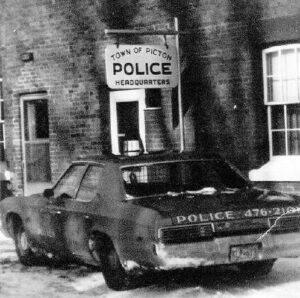
Not all the neighbours were thrilled with our setup. One day, a police officer showed up at the door after a complaint about horse manure on the sidewalk. Linda answered.
The officer, perfectly serious, asked if she owned a horse. Linda confessed to being part owner of a pony.
Then he followed up: “Which part of the pony is yours?”
Without hesitation, Linda claimed that since she fed the pony, the front half must be hers -- so therefore sister Joan was responsible for the back part.
The officer paused, took that in, and—perhaps deciding this was more than he’d bargained for—left us with a warning and a hint of a smile. The sidewalk got a bit more attention after that, but the story has lasted much longer than the complaint ever did.
Horses at the cottage
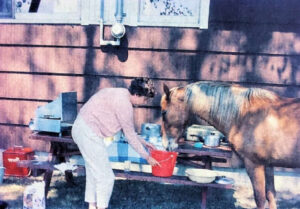
During the summer months, our horses came with us to the family cottage at Morrison’s Point. Those days were a mix of swimming, fishing, and riding with the Black River riding crew. I still remember lessons at Kettlewell's and quiet rides through the trails of Grimmon’s Woods.
At the cottage, the horses had free run of the property. My dad and grandfather had built cedar rail fences around the perimeter, even extending sections into the water so the horses could drink right from the shoreline. It worked well—until one summer we had a new idea: what if we swam with the horses?
There is nothing quite like being in the water while a horse moves beside you, or feeling yourself gently pulled along by that steady, powerful motion. It was thrilling in a way that’s hard to describe.
But, as often happens with “good ideas,” there was a catch. The horses quickly figured out that the water fences weren’t really fences at all. What had once kept them contained no longer stopped them from wandering a little too far—and suddenly, neighbouring properties were within easy reach.
The battle of the chuckwagon
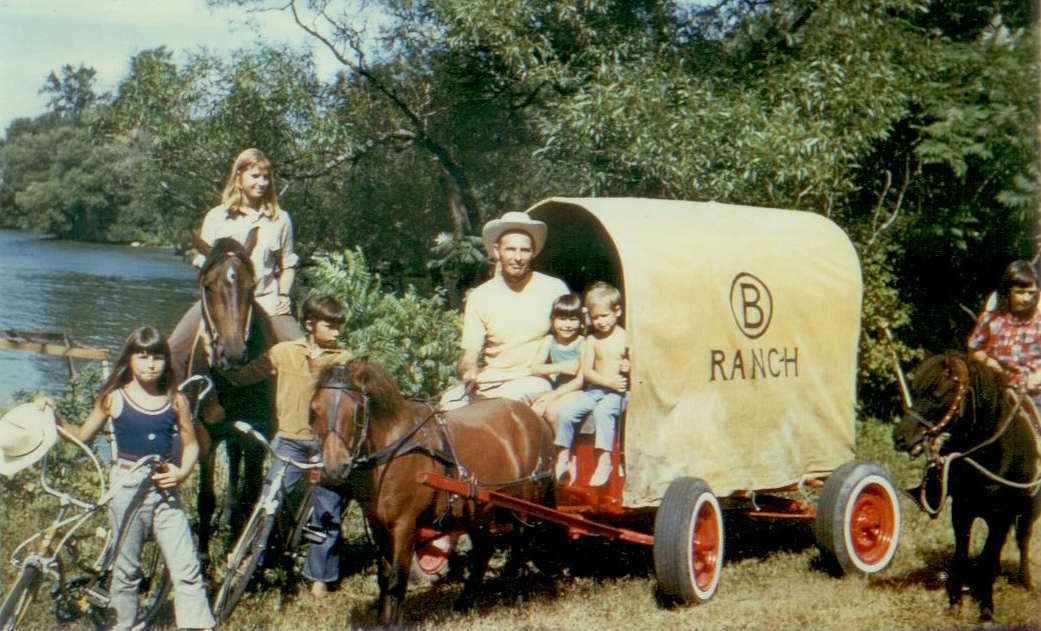
Some of my best memories come from our chuckwagon trips through South Bay, a place that meant a great deal to my dad. With his carpentry skills and my mom’s sewing, they built a custom wagon for Ginger to pull—small, sturdy, set on rubber tires, and just big enough for our supplies. My dad even rigged up a simple cooking setup on the back.
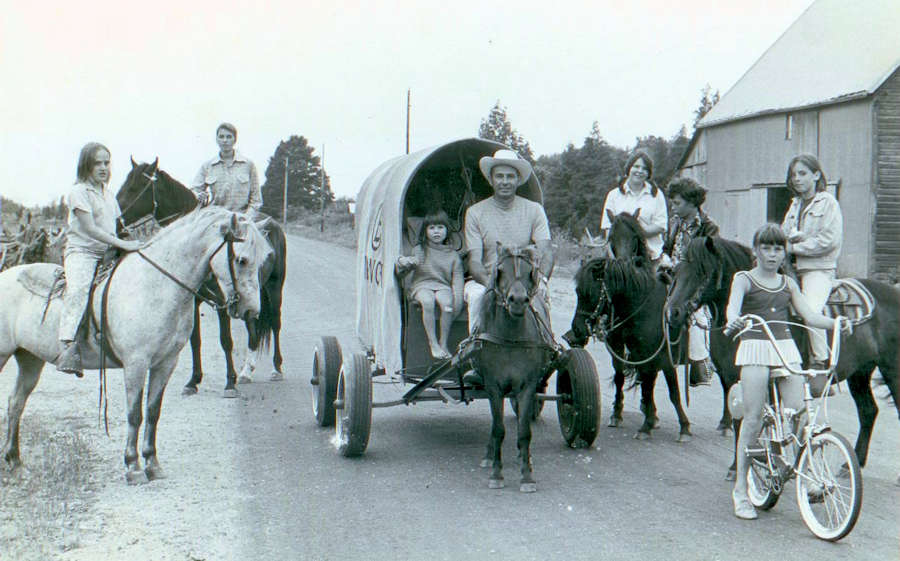
Getting Ginger ready each year was another matter. For about a week, we worked to get him used to the harness. He didn’t make it easy. There was plenty of resistance—pulling, kicking, refusing to cooperate—until he finally wore himself out. My dad was just as determined, and in the end, he always won. It became a yearly standoff, more routine than surprise.
Once Ginger accepted the job, though, everything settled into place. We’d set off with the wagon, my sisters and I alongside on horses or bikes. Before long, other kids would join in, trailing behind us through South Bay on whatever they had—ponies, bicycles, even on foot. Some would stay overnight, camping out under the stars. My dad knew everyone, and the feeling was mutual. Parents sent along extra food, and Dad took charge of the cooking on a Coleman stove, making sure no one went hungry.
It wasn’t fancy, but it was something special—long days, simple meals, and a loose parade of kids and wagons that turned into something like a small, rolling community. Those are the moments that have stayed with me. .
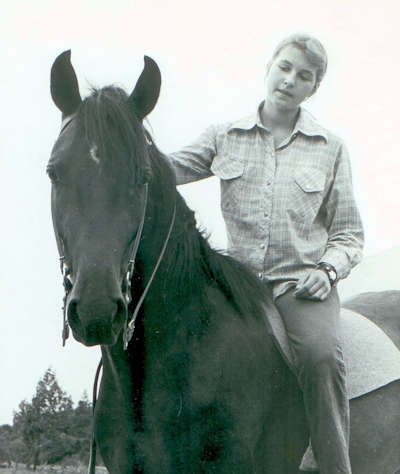
These are only a few of my misadventures with horses—the kind that rarely went according to plan, but somehow always led to something memorable.
This story was featured in County Magazine Winter 2023 issue.